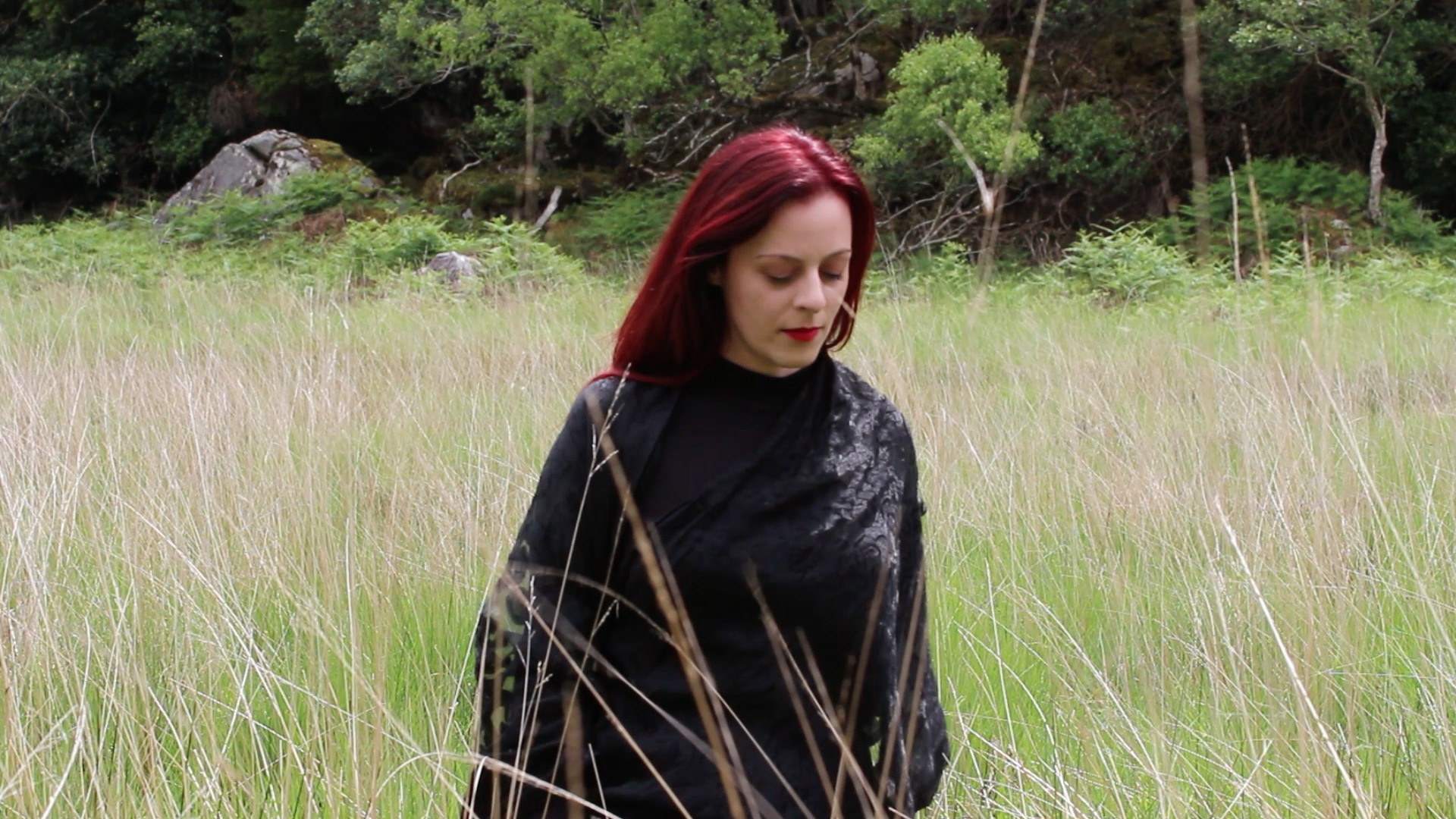
‘Ó ghlúin go glúin’: Dreams, Visions and the Bedrock of Poetry
You grew up in the Northwest Donegal Gaeltacht speaking Gaeilge as your first language. Are there words that hold a special resonance for you?
The whole river of Gaeilge language, fed by slipstreams of song, folklore and native ritual, offers me endless inspiration. As a first tongue it roots me into a place that is physical and it has instilled in me a belief that the veil between this reality and the world of the supernatural is, at times, very thin. Everyday words like ‘uaigneas’ (often translated as ‘loneliness’), or indeed ‘díograis’ (translated as ‘fervent love’), are portals through which an extraordinary depth of wild feeling spills. A word that I hold close to my heart is ‘dúchas’ (translated widely as ‘heritage’), a concept that is almost impossible to translate—the closest I can come to translation is to say that it refers to a sense of origin informed by interwoven and intergenerational connections to land, people, cultural traditions, beliefs and customs. To feel disconnected from that web of connectivity is to experience ‘deoraíocht’ (translated often as ‘exile’), which indicates a sense of ‘being away’ from a place of belonging, especially through displacement. The English language in me strives to find a way to hold the essence of these mother tongue words and out of that struggle springs poetry.
Are there Catholic prayers and hymns from your upbringing in Donegal that influenced your early imagination?
Yes, that influence was enormous. I formed a strong impression of the sacred work of language from an early age. I grew up on Cnoc Na Naomh (‘the Hill of the Saints’), a quiet stretch of heather bogland along the northwest coast of Donegal where it’s said that Saint Colmcille and his colleagues convened to decide who among them would convert the surrounding lands to Christianity. It’s a story that I heard all through my girlhood and one that remains popular, not least because it contains all the ingredients of a good story; conflict, strong characters and, of course, the divine intervention of God. The hill’s peak was clearly visible from the skylight window of my bedroom, offering a framed view of the neon-lit cross and marble altar erected up there by the local Catholic church. The cross was the last thing I saw each night before I fell asleep. Mass was offered on the hill every year and at home prayers like ‘Sé do bheatha, a Mhuire’ (‘Hail Mary’) were said daily.
Despite the Christian narrative that lies heavy on that hill, the scent of an older story remains potent. Brian Lacey, a Donegal historian, has suggested to me that Cnoc Na Naomh was likely once a site of worship associated with Lugh Lámhfhada, the god of light, a prominent figure in Irish mythology. Amazing to think that pilgrims have been trekking up that hill, beyond where my family washing line hangs, for centuries, to pray, light fires and offer songs! That comingling of beliefs is to be seen right across various parts of Irish culture but you’ll find that it’s especially vibrant in Gaeltacht regions. Traditional song, church prayer, legends of place, and threads of social history are all stitched into the soundscape of ordinary life and everyday celebrations in the Donegal Gaeltacht. Family lore tells of how my godfather set my Christening party into full swing with a rambunctious (if overly long!) rendition of ‘Róisín Dubh’, a famed political song, and I don’t necessarily think of that song as unspiritual or a bad fit for a sacred ceremony.
You speak often about your long relationship with your paternal grandmother, Mary Thaidgh, and about how that relationship, since her death, has continued in dreams. Would you agree that poetry is a space where we can attune ourselves to the subconscious?
Mary was a restless girl with a proclivity for tall tales, mischief and imaginative troublemaking. As a young emigrant in New York, she’d picked up a bright stream of Chinese folktales that she liked to interweave with the adventures of Balor na Súile Nimhe (Koong-se, the Mandarin’s daughter, was often on a ferry, being chased by palace officials all the way to Tory Island!) As a child, I was intrigued that she had travelled overseas alone by ship at just sixteen years of age (and in the wake of her mother’s sudden death), and I was intrigued by the courage it must have taken to come back home. Looking back, I think that one of the important gifts she gave me was a very earthy sense of female glamour, and a real feeling for what courage and instinct in a woman’s life look like. When writing poems, I draw heavily on those gifts, alongside the beliefs she gave me in ‘pisreoga’ and ‘leigheasanna’. Famously, she slept very little, and I loved staying overnight at her house. She’d set her alarm for some hour after midnight to get up, make herself a cup of tea, and think about her dreams before going back to bed for her second sleep. To have that example of a woman who dreamt on her own terms, literally by her own clock, was properly inspiring. I consider Mary to be of a generation that knew intimately the power of dream visions, that had a vocabulary for different types of dreams, and that understood the dreamspace of the subconscious to be the bedrock out of which poetry is carved.
In conversations about Hymn to All The Restless Girls you mention the power of “physicalized speech”. Is this kind of speech a place where the material and immaterial are knitted together?
Much of this collection took shape among the archives of the UCD National Folklore Collection, which is a magical place! It’s a surreal experience to lose yourself among the pages of those manuscripts and handwritten records, and I found my ear opening to the rhythmic nature of texts which included invocations, chants, charms, keens, spells, bad promises, cures and blessings. The ritualistic, embodied nature of this ‘physicalised speech’ felt familiar and very freeing. I was keen to test out the psychic power and musicality of poems that would sound as if they could be carried down, breath by breath, ‘ó ghlúin go glúin’, through generations of women. I quite like reading poetry aloud in public spaces, so perhaps I was also subconsciously in pursuit of poems that I could sing to an audience.
Tell us about the curses that the women of your rural community had access to. Aren’t they an especially strong kind of performative language, wishing people evil? How did they work (or were supposed to work)?
Like many Donegal women of her generation, Mary Thaidgh was a devout Catholic but she reserved a healthy suspicion for men with too much power, and she had a marvelous appreciation of the possibilities of language. She had misgivings about the clergy but she would not have ‘crossed’ the parish priest who was known to have the power of ‘an droch shúil’ (the ‘evil eye’). She issued playful curses, lyrical and witty, and they were designed only to embarrass, or cause minor discomfort to irksome people with whom she’d had direct dealings. A well-spun, light-hearted curse can be read as an innovative way to draw a problematic relationship into focus. ‘Evil’ is not a word that I’d use for the supernatural forces that she spoke of; the forces that she was attuned to took the form of ancestral ghosts or folkloric figures like the Banshee.
Are there specific rituals in your culture that you still practice?
Yes, I have a developing and intentional practice of ritual and folklore which underpins all of my work as a poet. Increasingly, I organise even my public readings around the lunar phases and the four fire festivals of Imbolc, Bealtaine, Lughnasadh and Samhain. Each festival invites different traditions. For example, on February Eve (Brigid’s Eve) I’ll place a rag cloth outside in the garden overnight to absorb the healing powers of the goddess and I’ll recite the associated invocation at the threshold of the house: ‘Gabhaigí ar bhur nglúine, osclaigí bhur súile, agus ligigí isteach Bríd bheannaithe.’ (Go on your knees, open your eyes, and let Blessed Brigid enter). On 1st May I’ll pick yellow wildflowers and scatter them at my doors and windows to protect the house from wicked or malevolent fairies. August is an especially important month for me as I grew up with Lugh Lámhfhada, who has been a cherished guide in my creative life, and this year I’m collaborating with Donegal ‘bean feasa’ Lucy Ní hAodhagáin to make a fire ceremony and engage people in the creation of ritual offerings. Samhain is marked by various customs to remember the dead. Throughout the year I tend a Pagan altar in my home and I try, as much as possible, to stay alert to annual days of celebration, among them Nettlemass night, Bilberry Sunday, Bonfire Night etc.
Is ‘spirituality’ a word that you are comfortable with in your personal or creative life?
I’m ambivalent about the word ‘spirituality’ and uncertain of how comfortably it belongs in any aspect of my life. Admittedly, I have used that word at times when speaking recently about Hymn to All the Restless Girls but I’m also carrying the feeling that the word doesn’t meaningfully reflect or energise my efforts to be in this evolving relationship with traditions of magic, enchantment and the Otherworld. Happily, the language that I need is still discovering itself.
This text was conceived as a written interview with Hedwig Schwall.
This text, '‘Ó ghlúin go glúin’: Dreams, Visions and the Bedrock of Poetry', is licensed under a CC BY-SA 4.0 license. No part of the Work may be used or reproduced in any manner for the purposes of training artificial intelligence technologies or systems. The Work is protected and reserved from text and data mining.